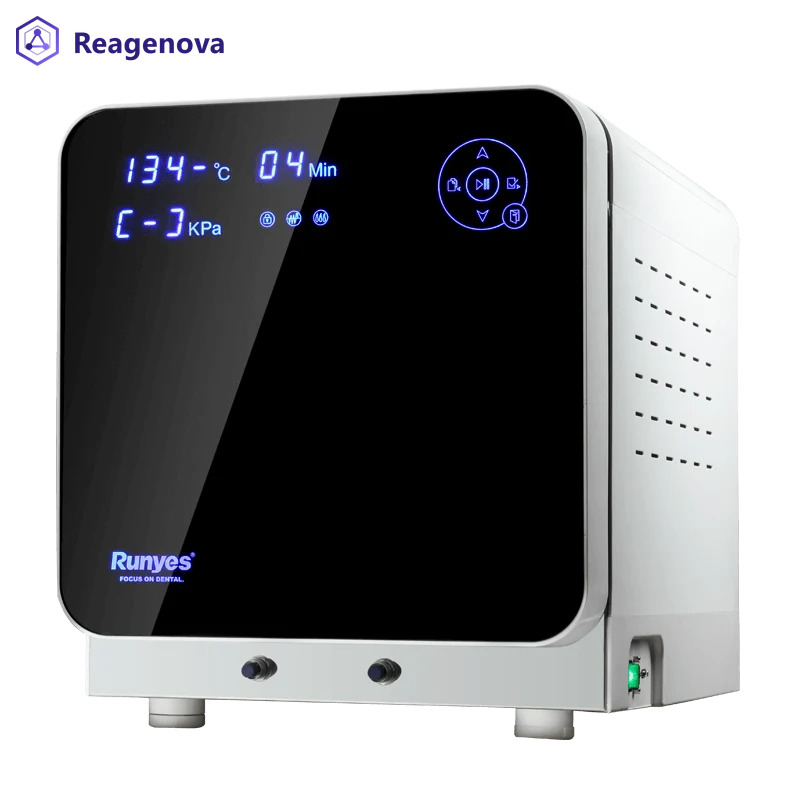
Runyes 23L B Class Autoclave: Touchscreen Sterilisation Unit
$4,851.00
Quick answer: The Runyes 23L autoclave combines Class B sterilisation capability with a full touchscreen interface and vacuum drying.
The Runyes 23L autoclave combines Class B sterilisation capability with a full touchscreen interface and vacuum drying. The touchscreen interface presents cycle selection and status in a compact, readable format.
Total:$4,851.00
Free shipping on Australian orders over $200Based on product subtotal after discounts.
About this product
This 23L sterilisation unit is designed for environments that require Class B cycles, pre-vacuum operation and controlled drying. The touchscreen interface presents cycle selection and status in a compact, readable format.
A vacuum drying stage helps reduce residual moisture after the cycle, which is important where wrapped instruments or porous loads are processed. The chamber size suits routine benchtop sterilisation without dedicating a large room to the unit.
Install on a suitable surface, follow the manufacturer's cycle validation guidance and keep maintenance records with each sterilisation log. Operator training should cover loading, sealing and post-cycle handling.
- 23L Class B chamber
- Pre-vacuum sterilisation cycles
- Vacuum drying stage
- Full touchscreen control
Specifications
| Form | Lyophilised powder |
|---|---|
| Purity | ≥99.0% (HPLC) |
| Testing | Identity confirmed by mass spectrometry |
| Intended use | In vitro laboratory research only |
Research Use Only. This material is supplied for in vitro laboratory research and is not intended for human or animal consumption, diagnosis or therapeutic use. Analytical figures quoted refer to the batch in hand.
Questions about this product
What does Class B indicate?
Class B sterilisation is designed for a broad range of loads, including wrapped and porous items, using pre-vacuum cycles and defined drying performance.
Why is vacuum drying useful?
Vacuum drying reduces residual moisture after the cycle, helping wrapped or porous loads reach a consistent dry state before storage.
What records should be kept?
Keep cycle type, date, operator, load description and maintenance actions together so each sterilisation run can be reviewed.
Related